In a five-minute text chat, GPT-4.5 playing a persona was picked as the human 73% of the time. That's more often than the real humans it was up against. The number comes from a UC San Diego study, and it's the first thing you hear in Episode 1 of Judgment Call, the new EvalLens podcast.
The obvious next question: does the machine think? Yaroslav and Kim spend 22 minutes refusing to answer it the easy way.
The short version
Judgment Call Episode 1 argues that the line between human and machine thinking is blurrier than it feels, and that responsibility is the line that holds. Dr. Kim Golubev walks through posthumanism, Turing's imitation game and a process-based definition of thinking, then lands on one rule: AI can prepare the analysis, but a person answers for the decision.
Turing's question:        Can machines think?
Posthumanism's question:  What did we mean by "think"?
Our question:             Who answers for the decision?
Kim's twist: people answering for decisions made with tools is much older than AI.
What is Judgment Call?
Judgment Call is a podcast from EvalLens about judgment, AI and responsibility. One big idea per episode, very little product talk. Co-founder Yaroslav Volovyi hosts.
His first guest is Dr. Kim (Akim) Golubev, our co-founder for research and academic partnerships. Kim researches posthumanism and teaches at the University of Nevada, Las Vegas. His book Posthuman Vital Materialism is forthcoming from Palgrave Macmillan.
A company that evaluates pitch decks launching a philosophy podcast sounds odd until you look at a rubric. A scoring system is a theory of judgment with a UI. Every rubric answers questions about who decides, on what evidence, and who signs for the result. We'd rather argue about those questions in public than pretend software settled them.
Posthumanism is not the robot apocalypse
Kim starts by fixing a name collision. When Francis Fukuyama wrote Our Posthuman Future in 2002, the fear was enhancement: biotechnology rewriting human nature. On the mic, Kim compresses that fear into Skynet and admits he's simplifying. His real point is that Fukuyama is describing transhumanism. It continues the Enlightenment project: a better, upgraded human at the center of the universe.
Posthumanism goes the other way. It takes the human off the pedestal the Enlightenment built and decentralizes the whole picture.
Kim's working definition: posthumanism is a philosophical school that redefines what it means to think and to be human. It adds three things to the account of a person: the environment, technology, and, in his words, "the animal that we are."
| Transhumanism | Posthumanism | |
|---|---|---|
| What sits at the center | An upgraded human | No single center |
| Technology is | A tool for enhancement | Part of what being human includes |
| Relation to the Enlightenment | Continues it | Questions it |
| The core question | How do we become more than human? | What did "human" include all along? |
That last row explains the episode title. Kim asks Yaroslav to guess how old the idea is. Yaroslav says 210 AD. Kim likes the guess, because most people would tie posthumanism to the postmodern theory of the 1960s and 70s. His own answer goes further back: as old as humanity itself, a theme he takes up in his book. In his reading, we didn't become posthuman when chatbots got good; we always were.
The field is bigger than one book. In the episode, Kim name-checks N. Katherine Hayles, Rosi Braidotti, Cary Wolfe and Francesca Ferrando, all good places to start reading.
Turing didn't like his own question
In his 1950 paper Computing Machinery and Intelligence, Alan Turing asked "Can machines think?" and in the next breath replaced it: the words "machine" and "think" were too slippery to define. He swapped the question for a game.
The original imitation game had three players: a man, a woman, and a judge who can only exchange typed messages with them. The man's job is to lie and pass as the woman. The woman's job is to tell the truth. If the judge identifies both correctly, the woman wins. If not, the man does.
Then Turing swapped the man for a machine. Same setup: one player imitates, one tells the truth, and the judge has only text to go on. If the judge can't tell them apart, one plausible conclusion is that the machine thinks.
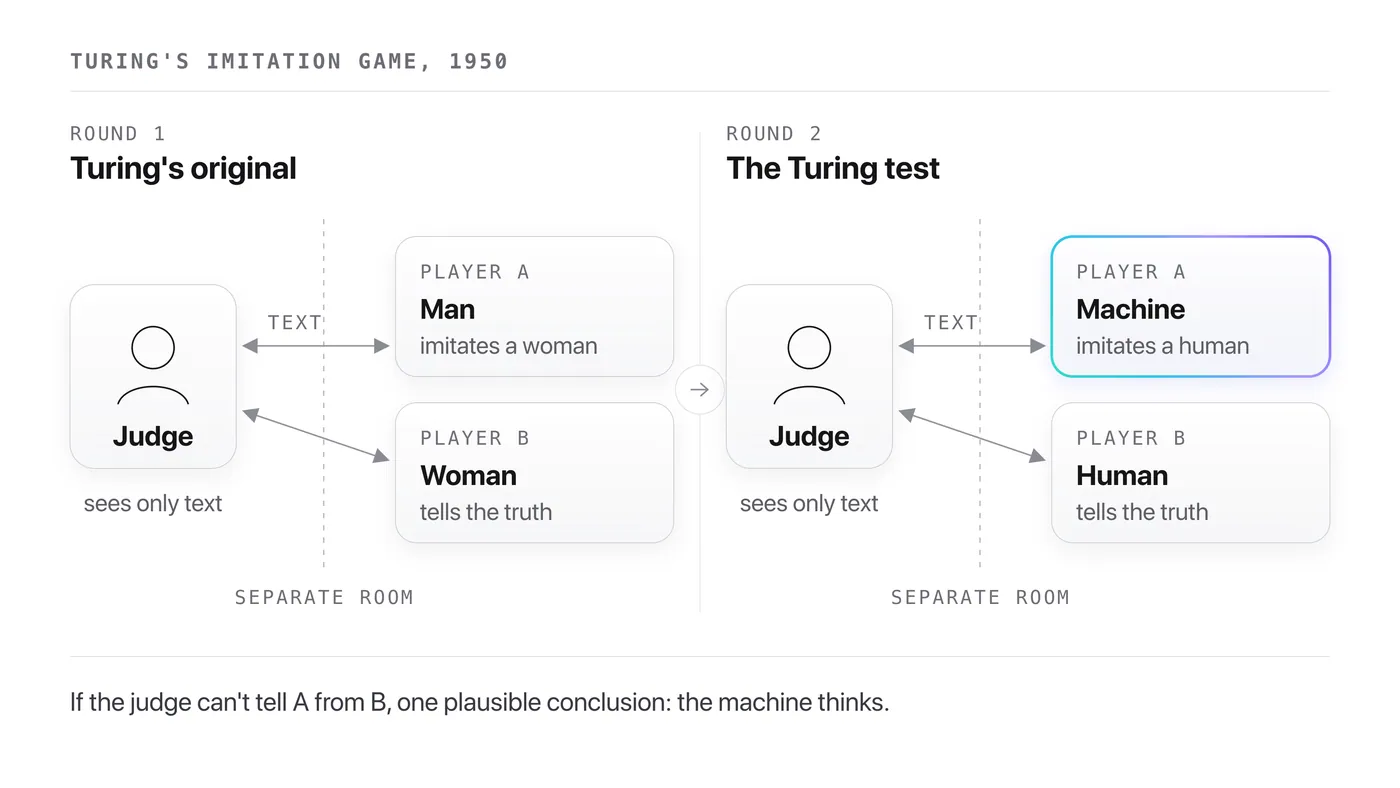
"Plausible" carries a lot of weight in that sentence, and Kim leans on it. Keep one detail in your pocket for later: the judge has nothing but language.
So what counts as thinking?
Before anyone can say whether machines think, someone has to define thinking. Yaroslav offers his on the spot: a process that takes knowledge, from nature or from other people, and uses it to form concepts and solve problems. Getting from point A to point B.
Kim keeps the key word, process, and brings in the definition he works with. It comes from N. Katherine Hayles, author of How We Became Posthuman, one of the field's founding books. In Unthought (2017), she describes cognition as "a process that interprets information within contexts that connect it with meaning."
Now run that definition and see who qualifies.
- Language models take in what humanity has written, run it through a prediction model, and get from A to B. Yaroslav's conclusion on the mic: by this standard, yes, machines think.
- Trees collect information and act on it in context. So do bacteria. Kim's answer to "do they think?" is short: yes.
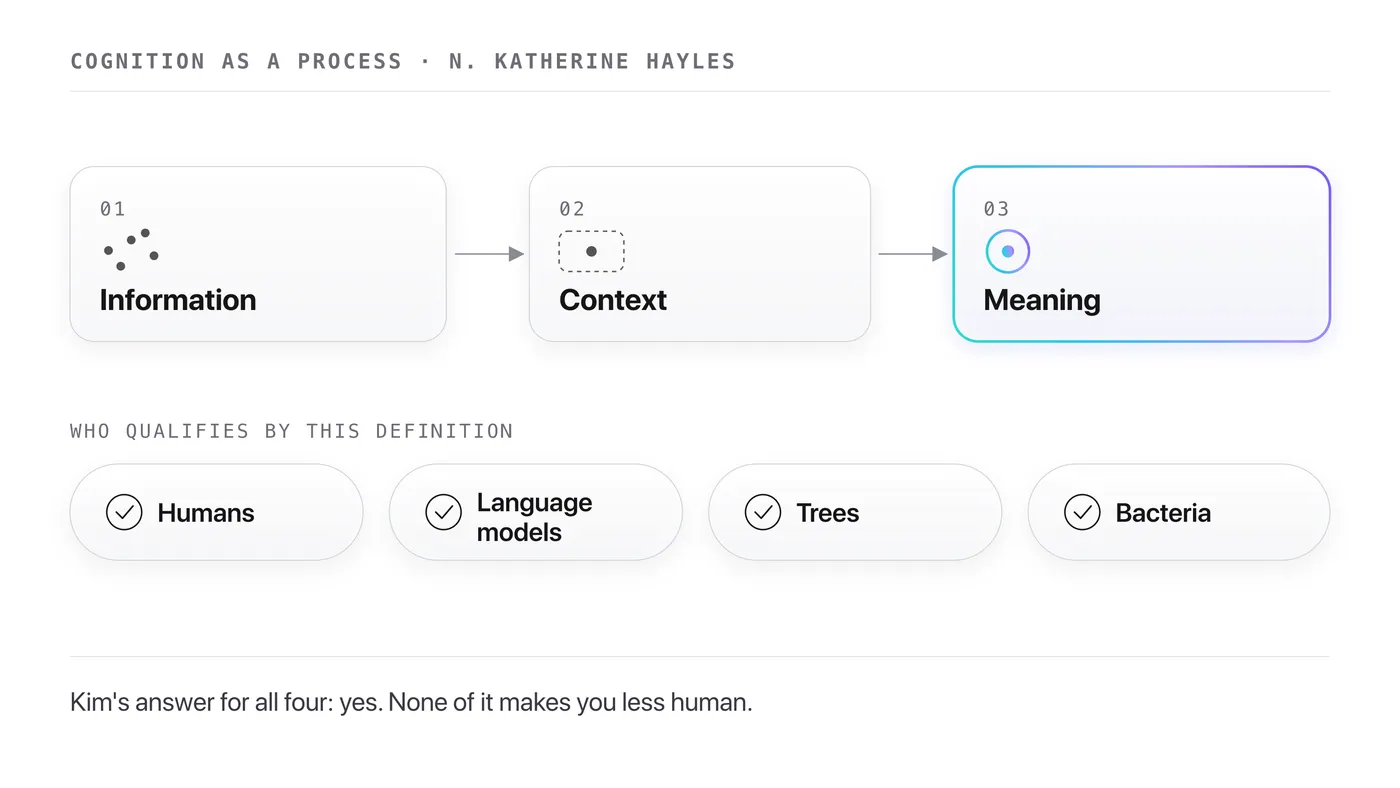
Kim adds a caveat: none of this makes you less human, and it doesn't make technology more human. Once being human already includes technology, the environment and the animal we are, cognition becomes a wider category. In this view, we drew the border between human and machine thinking in the wrong place from the start.
"I know I'm not a machine"
The best moment of the episode is Kim arguing against himself. He plays the skeptic: this is useless philosophy, you defined cognition the way it suits you and slipped machines into it. "I know I'm not a machine," the skeptic says. "I know I'm not a dog," even if the dog moves its paws in its sleep.
Yaroslav fires back: if we might be living in a simulation, how would you prove you're human?
Kim answers with "I think, therefore I am" and points out that Descartes got there first. Descartes imagined an evil demon feeding him a false world, and later philosophers recast the idea as a brain in a vat. Picture a brain in a jar, convinced that it's named Yaroslav, that it runs a company and talks to friends. How would it know otherwise?
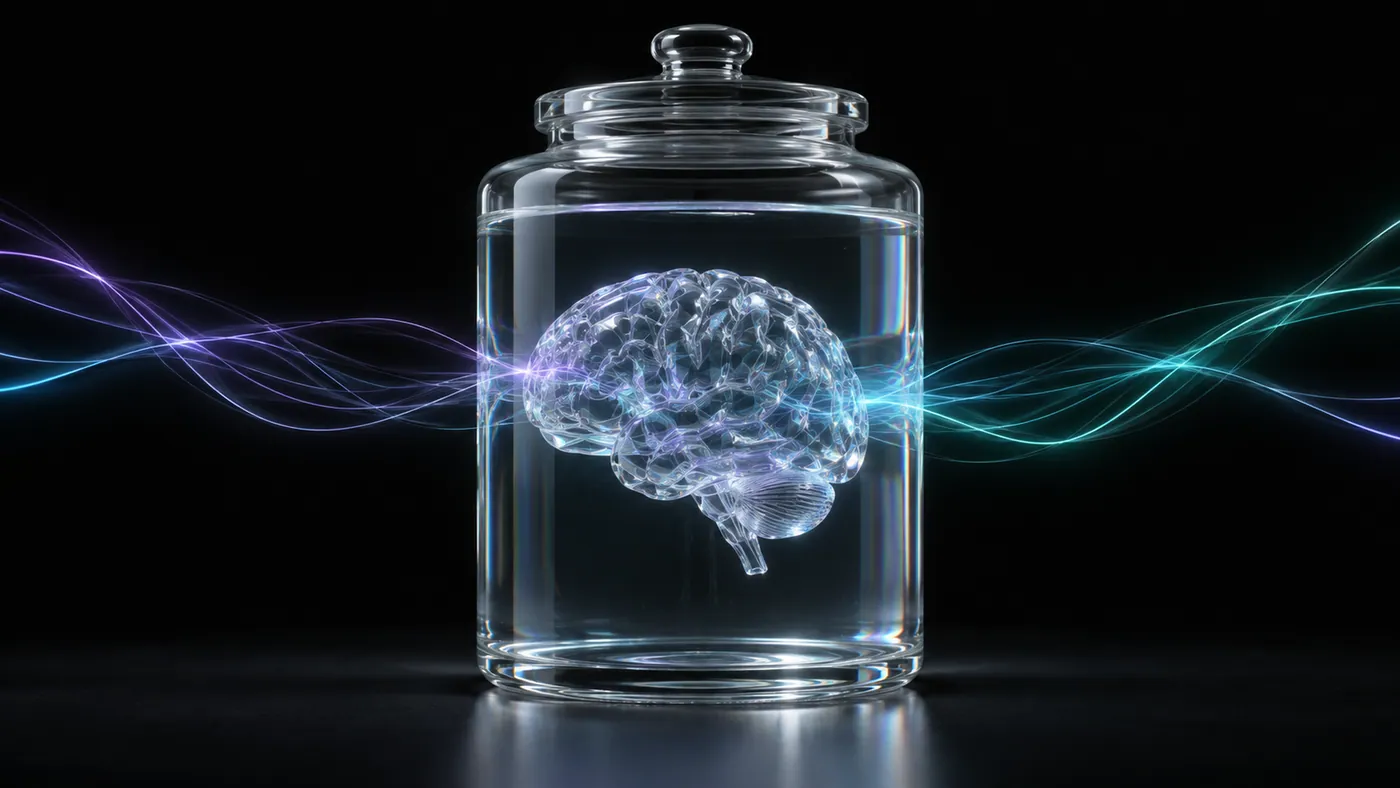
Kim's point is smaller than the thought experiment: "I'm obviously human" is weaker evidence than it feels. You'll want better evidence once the thing on the other end of the chat gets picked as human 73% of the time.
Language is the interface
Back to the judge. How does the judge talk to the players? Through language. Messages go out, messages come back.
Kim's summary of what 20th-century theory, from post-structuralism to affect theory, left us: language works as a feedback system. Feedback means adjustment. There's a small gap between the moment a message arrives, the moment we process it, and the moment we answer. His shorthand, which he traces back to Kant: language is the software that runs on the hardware of the brain.
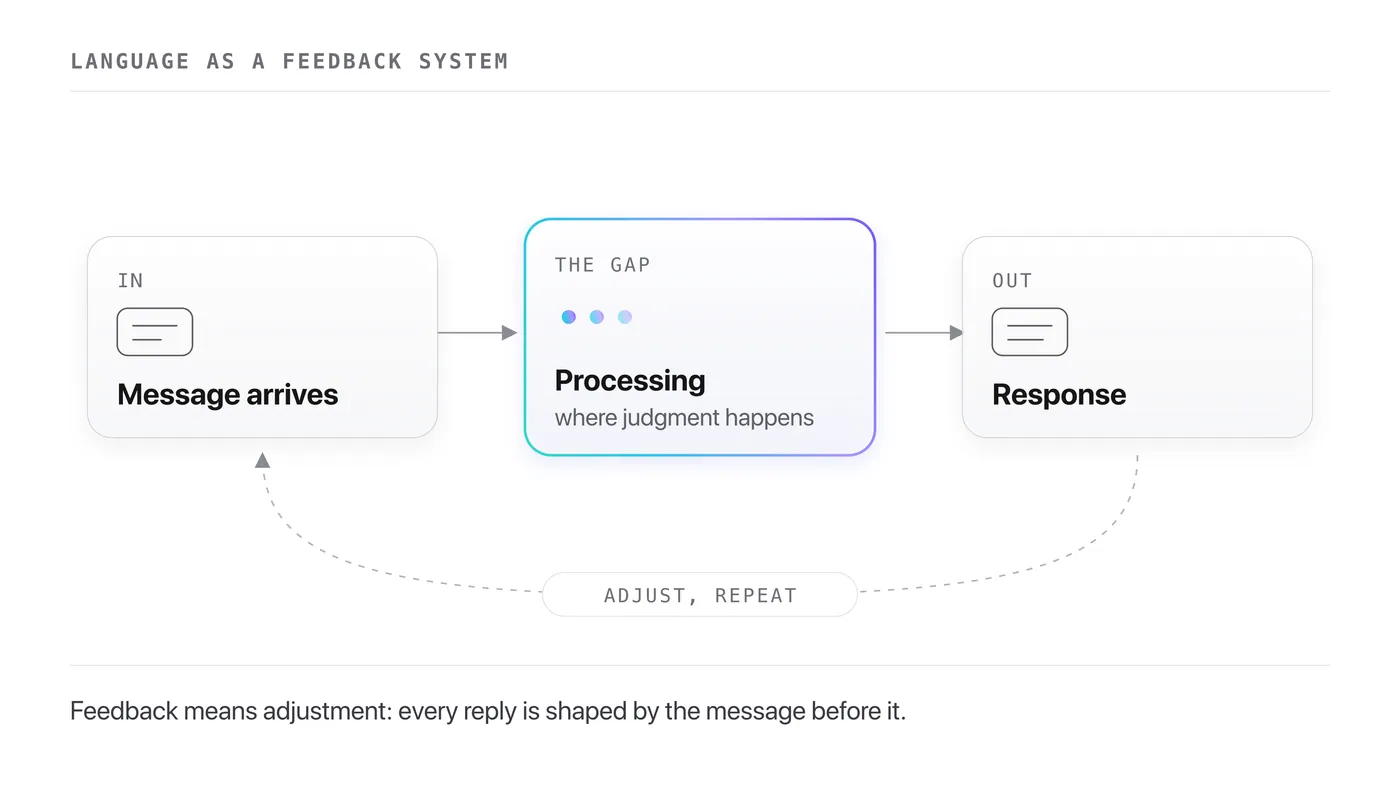
Yaroslav takes it both ways. By this logic, he says, we start to look a bit like machines ourselves. Then again, maybe this gap is exactly where we differ, because our feedback is shaped by emotion. Kim doesn't settle it. He turns the question to Yaroslav's day job.
If the interface is language, the line between human and machine output gets thinner with every model release. The question of who stands behind the output stays as sharp as it was in 1950.
The line that holds is responsibility
Yaroslav explains how EvalLens works with AI today: models get rules to follow strictly and detailed instructions for getting from point A to point B. In practice, that means evaluating pitch decks. Specialized lenses read every deck, every score links to evidence from the slides, and the organizer makes the final call.
The longer arc, in his words on the episode: a "second mind," a digital twin of a person. And with it, a rule. Today you take responsibility for the job you do. Tomorrow you take responsibility for the jobs done by your AI agents.
Kim's reply is the thesis of the whole episode: responsibility has already been taken. We've been carrying it all along, he says, without fully realizing it. In posthuman terms that tracks: people have spread their thinking across tools, environments and each other for as long as there have been people, and someone always had to answer for the result. What's new, in Kim's words, is acknowledging it and building an ethical model that makes that responsibility accessible and useful.
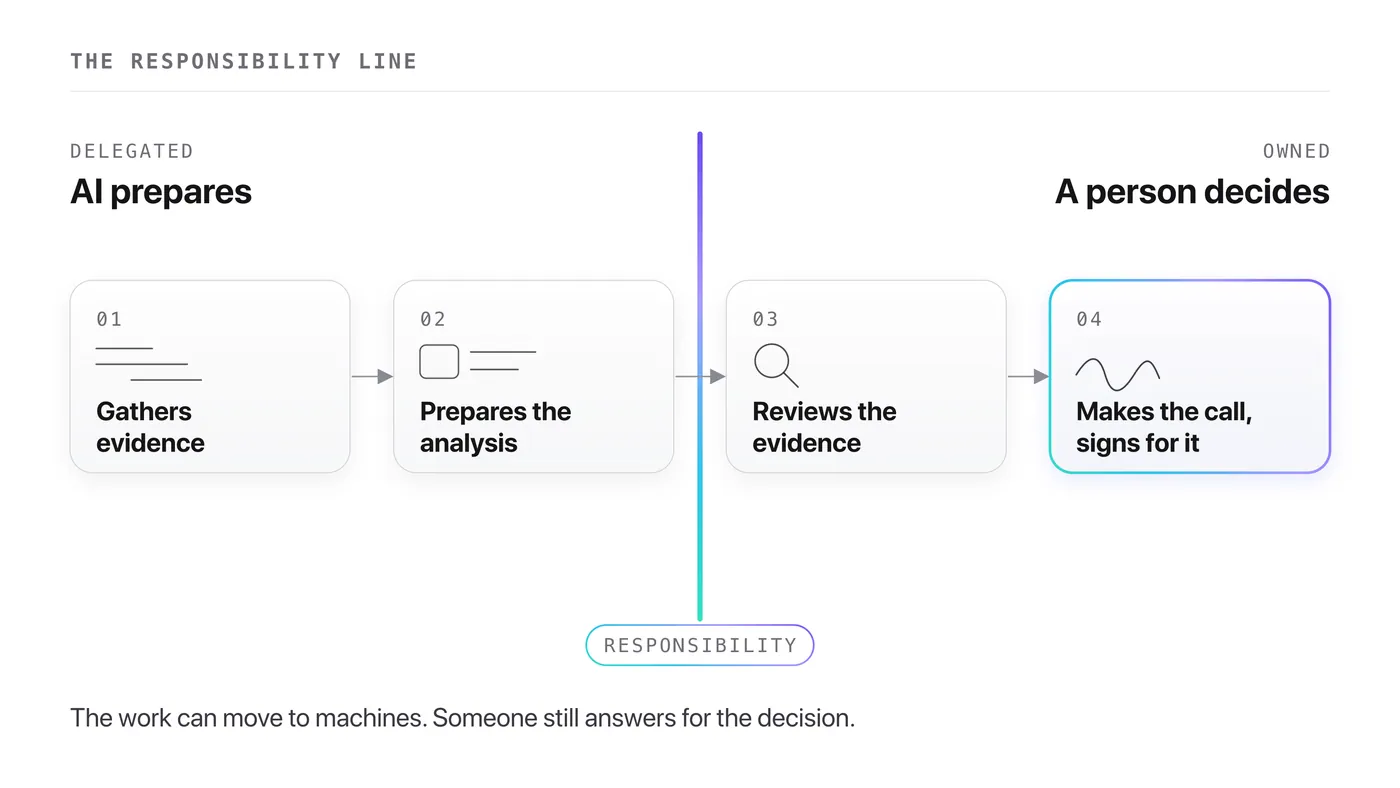
We call this the price of responsibility. When execution gets cheap, the person who stands behind the decision becomes the scarce part.
Kim also names the hard part and leaves it for later episodes: how to use responsibility responsibly, and how to operate inside a capitalist reality without giving in to it.
Key moments in Episode 1
- 00 GPT-4.5 and the 73% result
- 01 Meet Dr. Kim Golubev
- 01 Have we always been posthuman?
- 02 Posthumanism vs. transhumanism
- 03 Turing didn't like his own question
- 04 The imitation game
- 06 How old is posthumanism?
- 08 Defining posthumanism
- 09 What counts as thinking
- 10 Katherine Hayles and Unthought
- 11 So do machines think?
- 12 "I know I'm not a machine"
- 14 Simulation, Descartes and the brain in a jar
- 15 Do trees and bacteria think?
- 16 Language as software for the brain
- 17 Language as a feedback system
- 18 How EvalLens works with AI
- 19 Digital twins and responsibility
- 20 Responsibility has already been taken
- 20 What's next
One correction, and what's next
In the cold open we call the Turing test study a preprint. It started as one, on arXiv in March 2025, and it was published in PNAS in May 2026 after peer review. The authors are careful about what it shows: the test increasingly measures humanlikeness, not intelligence or consciousness. Episode 1 lands in about the same place.
More episodes are coming. Tell us in the YouTube comments what you want us to argue about next, and subscribe to @EvalLensAI so you don't miss them.
And if you run a pitch competition, an accelerator or a fund screen and want AI to prepare the analysis while your team keeps the final call, book a demo.
Common questions
What is Judgment Call? Judgment Call is the EvalLens podcast about judgment, AI and responsibility. Co-founder Yaroslav Volovyi hosts conversations about how people and machines share decisions. Episode 1, "We've Always Been Posthuman," features Dr. Kim Golubev on posthumanism, the Turing test, and why people stay responsible for the calls they make with AI.
What is posthumanism? Posthumanism is a philosophical school that redefines what it means to think and to be human. Instead of putting the human at the center of everything, as the Enlightenment did, it treats the environment, technology and our animal nature as part of being human. Key thinkers include N. Katherine Hayles, Rosi Braidotti and Cary Wolfe.
How is posthumanism different from transhumanism? Transhumanism continues the Enlightenment: an enhanced human stays at the center, upgraded by technology. Posthumanism questions that center and treats technology, environment and our animal nature as part of being human. According to Dr. Kim Golubev, Francis Fukuyama's warnings about a posthuman future describe transhumanism more than posthumanism.
Did GPT-4.5 pass the Turing test? In a UC San Diego study by Cameron Jones and Benjamin Bergen, GPT-4.5 prompted with a humanlike persona was judged to be the human 73% of the time in five-minute, three-party text chats. The study was published in PNAS in May 2026. The authors say it measures humanlikeness, not intelligence or consciousness.
Who is responsible when AI does the work? A person. AI can gather evidence and prepare an analysis, but someone still signs for the result. EvalLens builds evaluation tools on that rule: AI prepares structured, evidence-linked analysis, and the human team makes the final call. As AI agents take on more work, owning their output becomes the scarce skill.