



A score you can explain. Evidence you can check.
See how each team scored, what drove the result, and what to ask next. You make the final call.
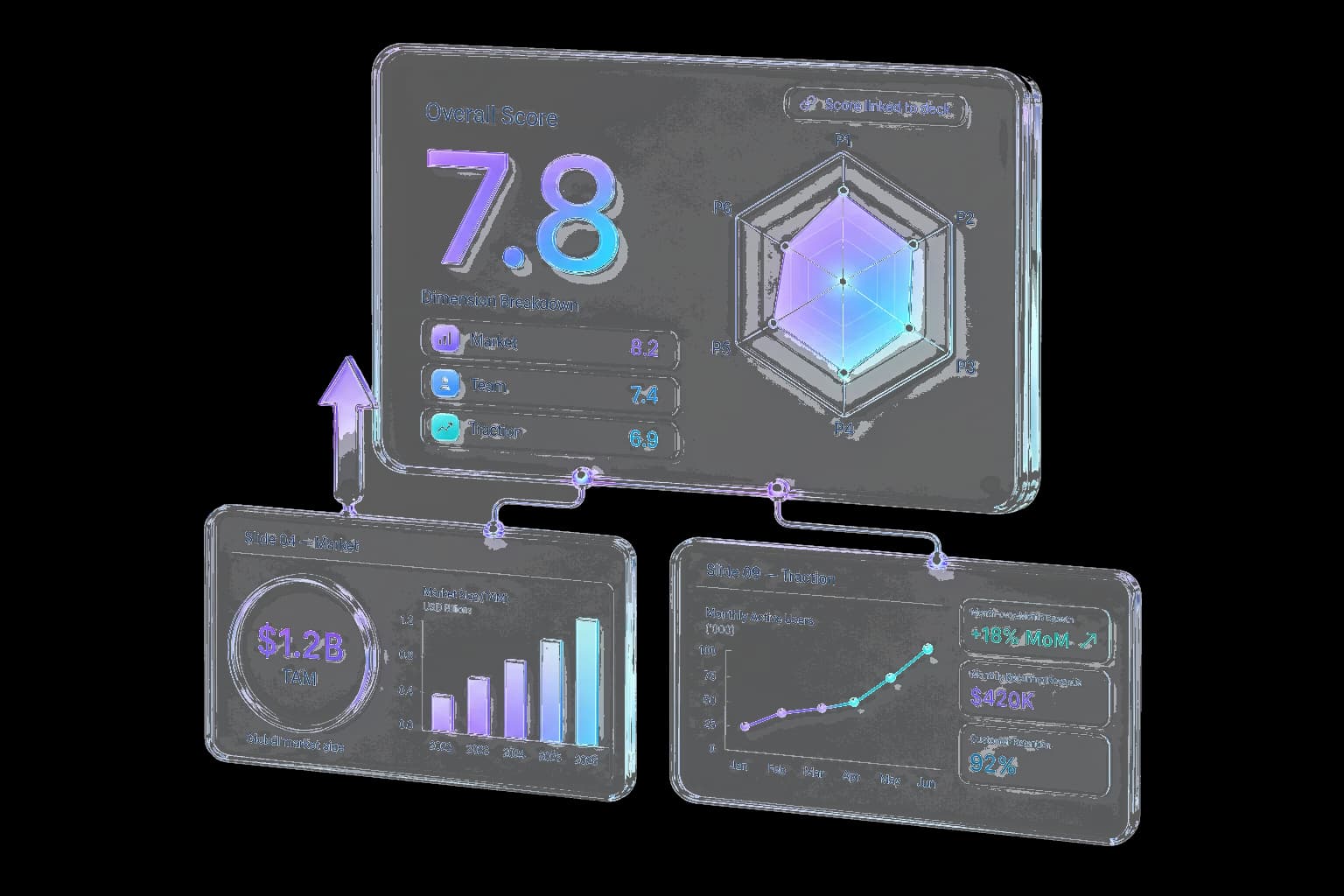
- Skip the first readStart with the report, not the raw deck.
- Up to 40 hours savedAcross 100 decks, that can save a full week of reading.
- Review all decks at onceDecks are processed in parallel, not one by one.
Explain the score. Defend the decision.
EvalLens shows what shaped the score and links each finding back to the deck. Your team can defend the shortlist, explain the feedback, and know what to ask next.
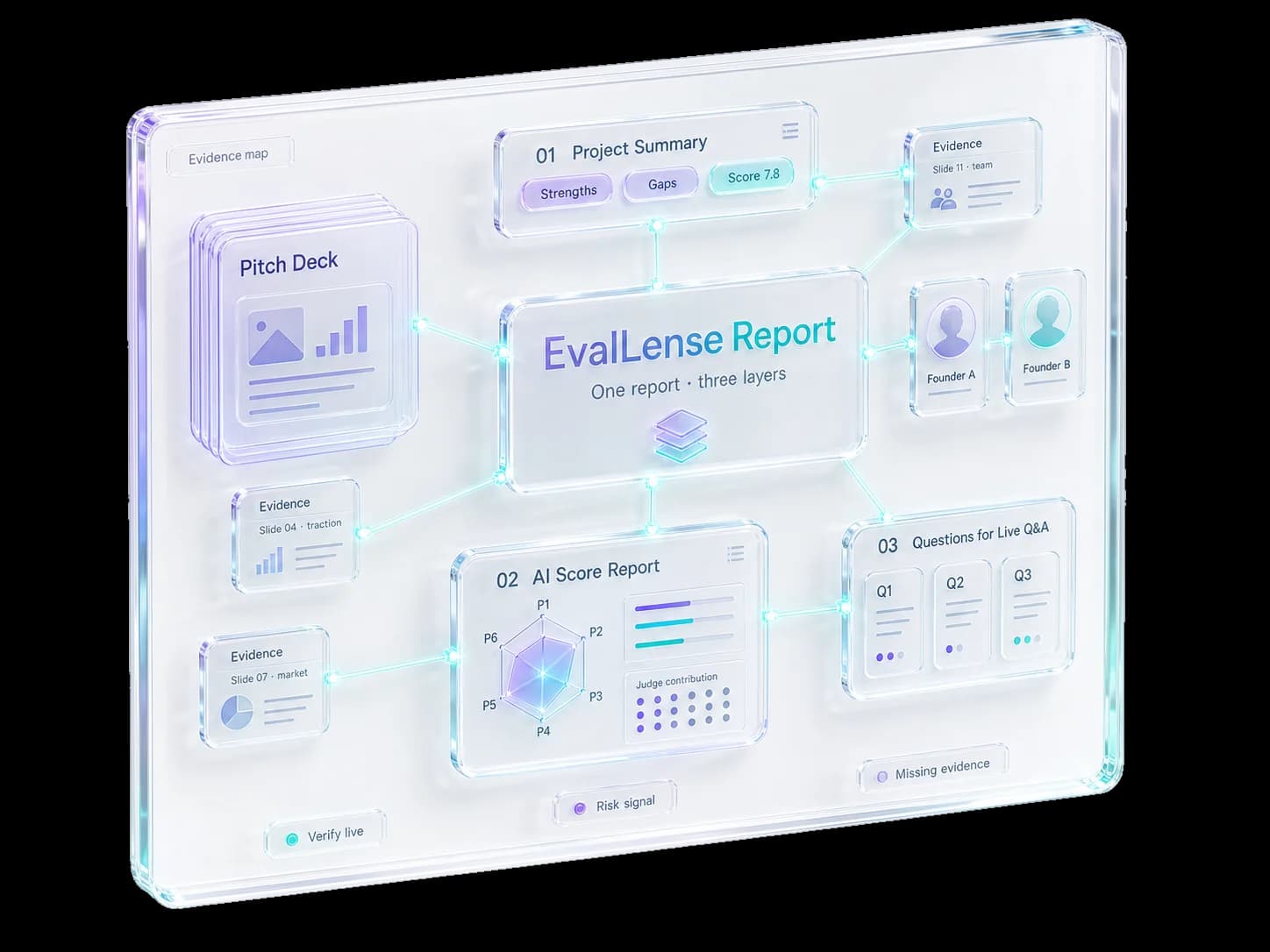
One report.Three layers.
Start with the summary. See what shaped the score. Walk into the room with the right questions.
- 01Project SummaryThe fast read: what the project does, how it scored, where it looks strong, and what to verify live.
- 02AI Score ReportSee what shaped the score, how each judge contributed, and how every dimension affected the result.
- 03Questions for Live Q&AReady-to-use questions, ranked by priority and linked to the dimension each one tests.
See what shaped every score
See the evidence, confidence, judge input, and weights behind every score.
- Per-dimension breakdown
What raised it. What lowered it.
For each dimension, see the score, confidence, what supports it, what lowers it, and what would change it.
- Judge contribution matrix
How each judge contributed
See who contributed to each dimension and where strong disagreements were flagged.
- Score formation
How the total adds up
See each dimension score, its weight, and its contribution to the final result.
- Methodology
The rules behind the score
The scale and scoring rules used consistently across every deck.
- Initial criteria
Your weights, fixed across the batch
Your criteria stay read-only and apply to every team on the same basis.
- Judge conclusions
Each judge, on the record
A takeaway, main concern, and live question from every judge.
Every finding links back to a slide
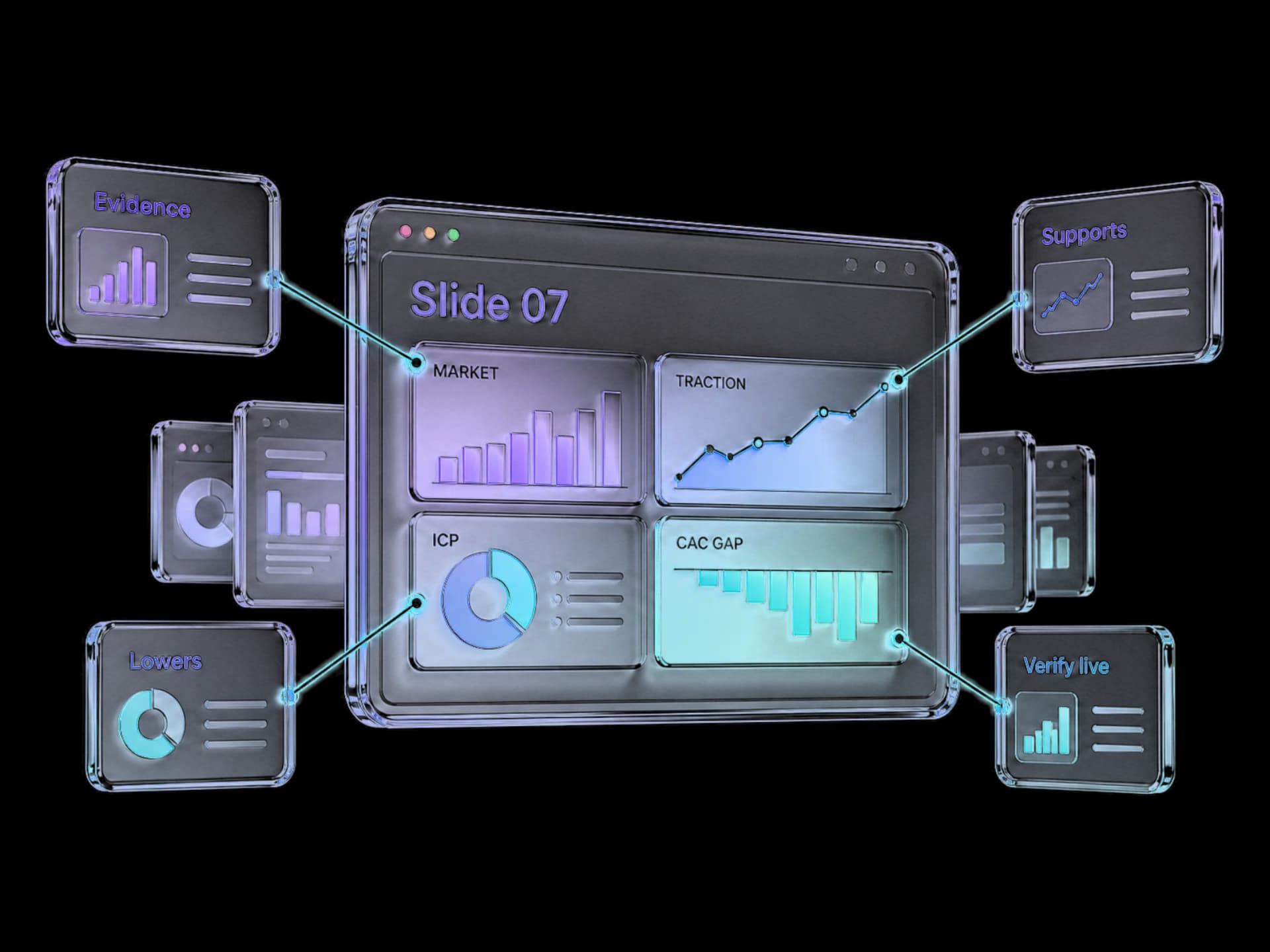
The report is built to be checked. Each score comes with what supports it and what lowers it, and every finding points to the slide it came from — so a claim reads as an observation, not an opinion.
What supports, what lowers
Each dimension lists the concrete signals that raised or reduced its score.
Linked to the slide
Every finding cites the exact slide — number, title, and note — so you can open it and check the claim against the source.
Built for live Q&A
See where a deck is thin before the team is in the room.
See what the deck never covered
The report checks which core sections are present, thin, or missing, then shows the severity and the dimension affected. It’s a review signal, not a verdict.
- 10 core sections
Present, thin, or missing
Problem, Solution, Market, Business Model, Traction, Team, Roadmap, Financials, Ask, and Other — each checked for presence and depth.
- Severity
Every gap ranked by severity
Each gap is marked info, warning, or critical and linked to the dimension it affects.
- Not a fact-check
Missing does not mean false
Completeness flags missing or thin coverage. It does not validate the claim itself — that remains a human judgment.
One report, from first read to final record
The same report supports preparation, selection, feedback, committee decisions, and the final record.
A briefed first read — walk in already knowing each deck's strengths, gaps, and what to ask.
Compare teams on the same structured basis, not gut feel.
Give every team concrete, structured feedback — not just a yes or no.
Bring a defensible, evidence-linked basis for the decision.
Keep a clear record of how every team was evaluated.

AI prepares. You decide.
See a real report on your own deck — book a demo and walk through a full evaluation report: summary, reasoning, and the questions to ask live.