



Private pitch-deck handling. Human decisions.
EvalLens keeps pitch decks, workspace access, and report delivery controlled. AI prepares the review. A person decides what happens next.
Decks and results carry sensitive information
Pitch decks often include strategy, financials, founder details, and selection outcomes. That information should not move freely or leak through open links.
Strategy
A deck can include plans, positioning, and market strategy.
Financials
Revenue, pricing, burn, or fundraising details need controlled access.
Founder details
Team backgrounds and founder details should stay inside the review flow.
Review outcome
Scores, notes, and shortlist decisions can affect funding, selection, and reputation.
- Controlled workspace
Each batch stays inside a controlled workspace
Evaluation runs inside a workspace owned by the organizer. Access is scoped to the people and roles that belong to that project.
- Organizer-owned project
One organizer owns each project in MVP
In the MVP, each project belongs to one organizer. That organizer owns the decks, evaluations, and reports.
- Publish gate
Intake opens only after publishing
Participants submit through /e/<slug>. The page is public only after the organizer publishes the project. Before that, it returns 404.
Access is enforced below the UI
Access is not handled only by the interface. Sessions, roles, database policies, and server-only keys decide what each request can see.
Sessions live in httpOnly cookies. Client-side scripts cannot read the token directly.
Postgres applies row-level security. Organizers can read and write only the projects tied to their account.
Service-role and AI Gateway keys stay on the server. Admin operations run only after an explicit admin check.
The public /e/<slug> page opens only after the organizer publishes the project. Before that, it returns 404.

Reports are shared on purpose
Reports should move through the organizer's workspace, not through accidental public access. Participant-facing report sharing is post-MVP.
Shared deliberately, not leaked
A report reaches someone only when the organizer chooses to share it. Participant-facing sharing comes after MVP.
The final decision stays human
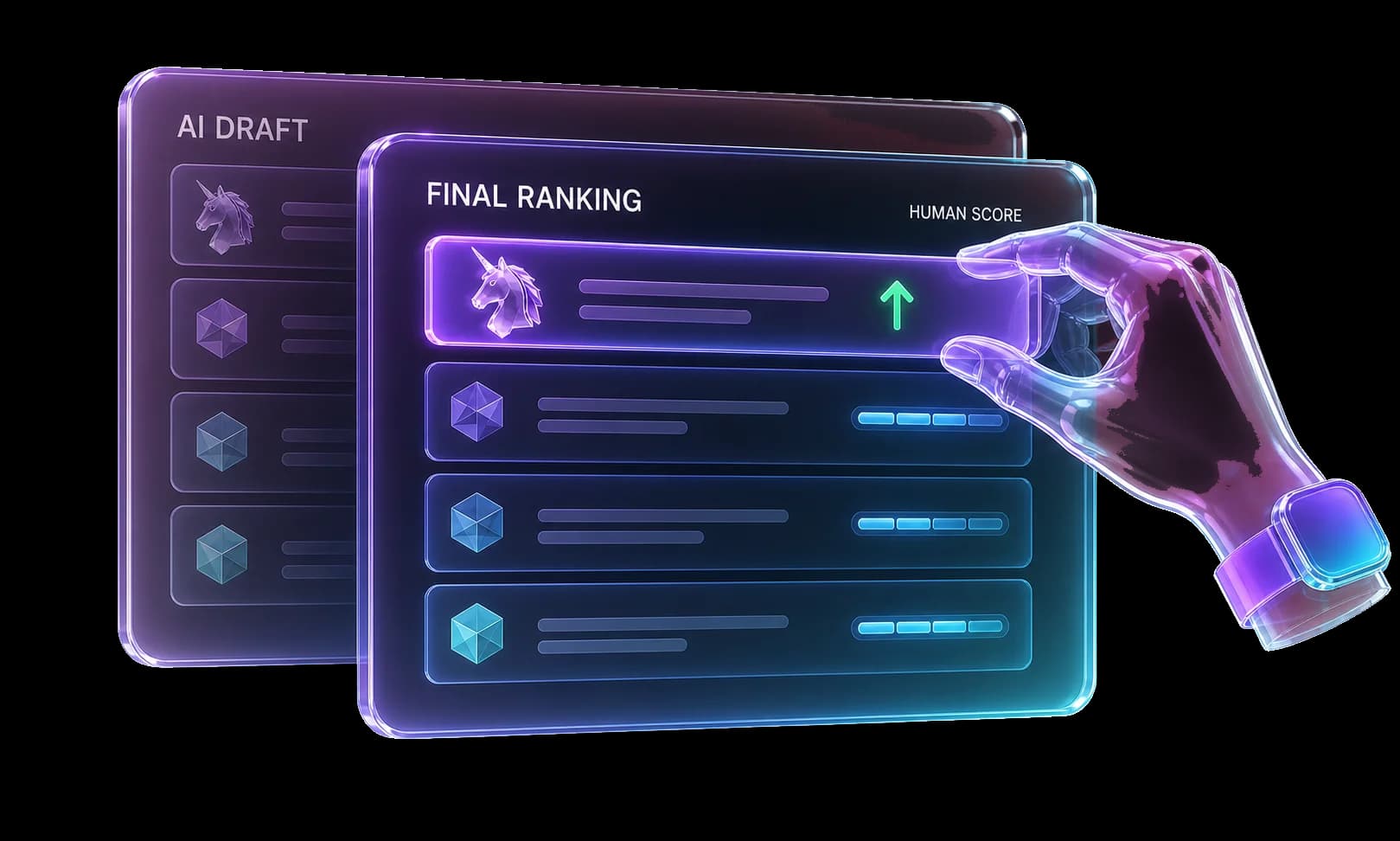
EvalLens prepares the analysis. The organizer reviews it, sets the final scores, and decides how the report is used. AI does not become the final judge.
AI analysis is advisory
AI Total Score is a reference. It does not rank participants by itself.
Human owns the final score
Ranking is built from the organizer's final scores. The organizer decides how the report is used.
Ask any AI vendor who actually processes your decks
A 2026 DataGrail review found 63.6% of vendors advertising AI never name a third-party AI sub-processor in their legal documents ( VentureBeat). Ours are published, with purpose and processing region for each, before any sales call: the sub-processor list, the DPA, and this page. Bring your security questionnaire to the first conversation, not the last.
Run a controlled pilot on your own decks
Book a demo and see how EvalLens handles decks, access, reports, and final decisions in one controlled flow.